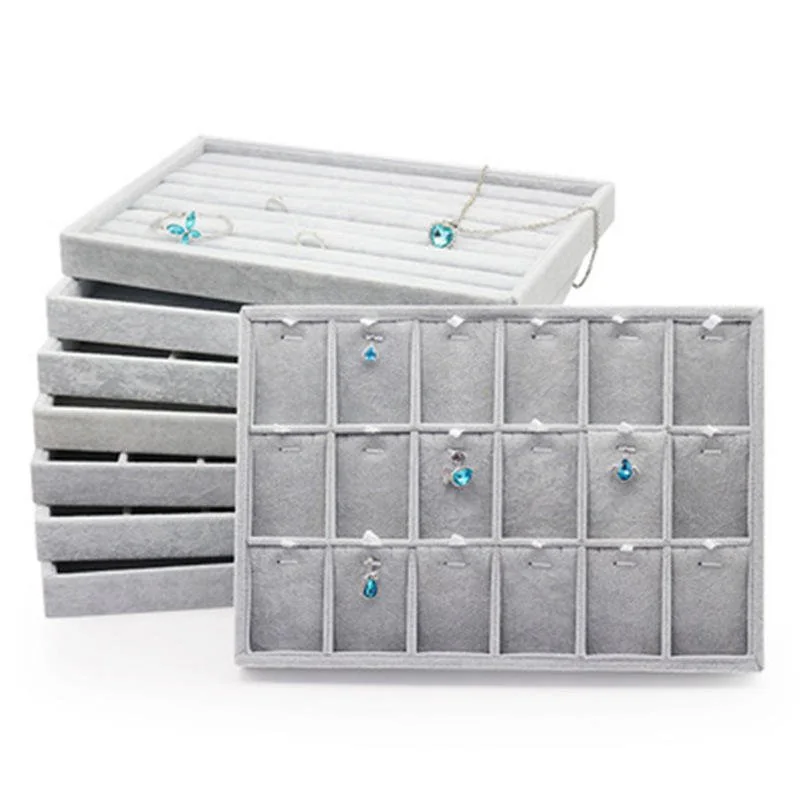
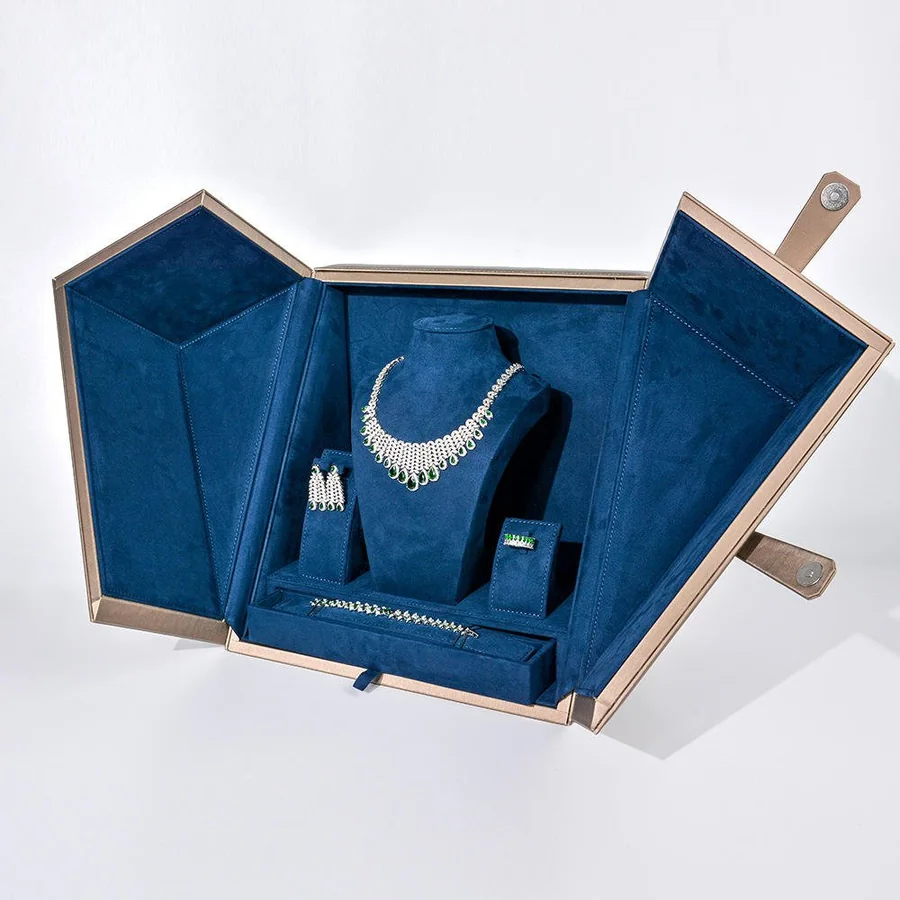
One box is looked at; the other is opened and closed for years. If you are buying both, keep them separate. If one has to do both, decide which job it is allowed to fail.
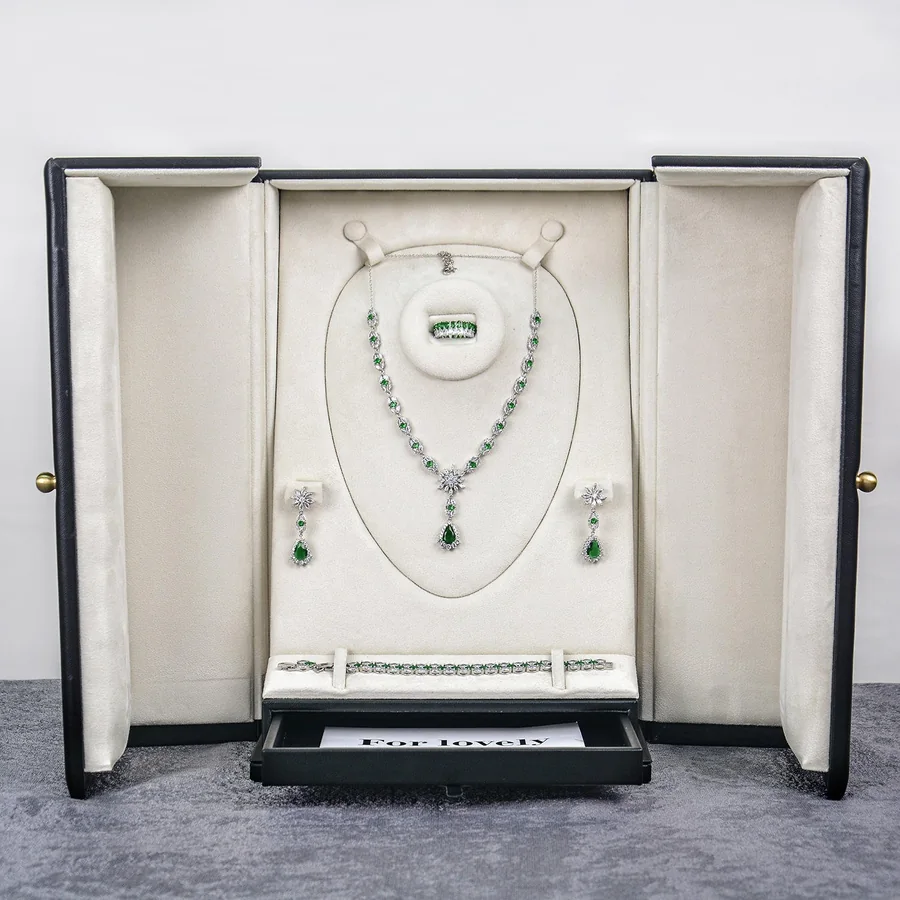
Display: what the buyer sees first
A display box is judged on its lid, its angle and the way light falls on the piece. Inserts are usually shallow so the product sits proud of the box, and materials are chosen for appearance. Little of that survives daily opening.
Display boxes are often specified in small quantities for a counter, a photo shoot or a launch, so finish matters more than unit durability. Sharing one inner tray across finishes — silk paper, printed paper, velvet — is a common way to keep the cost down.
Storage: what protects for years
A storage box is judged on the insert, the closure and the material behind the lining. Deep, die-cut foam or velvet-over-foam trays keep pieces from moving; a firm lid and a clean hinge keep dust out. This is where a close-fitting lid earns its place.
Storage boxes are bought in the sizes the collection actually has, so the interior layout should be designed around the real mix of rings, chains and watches.
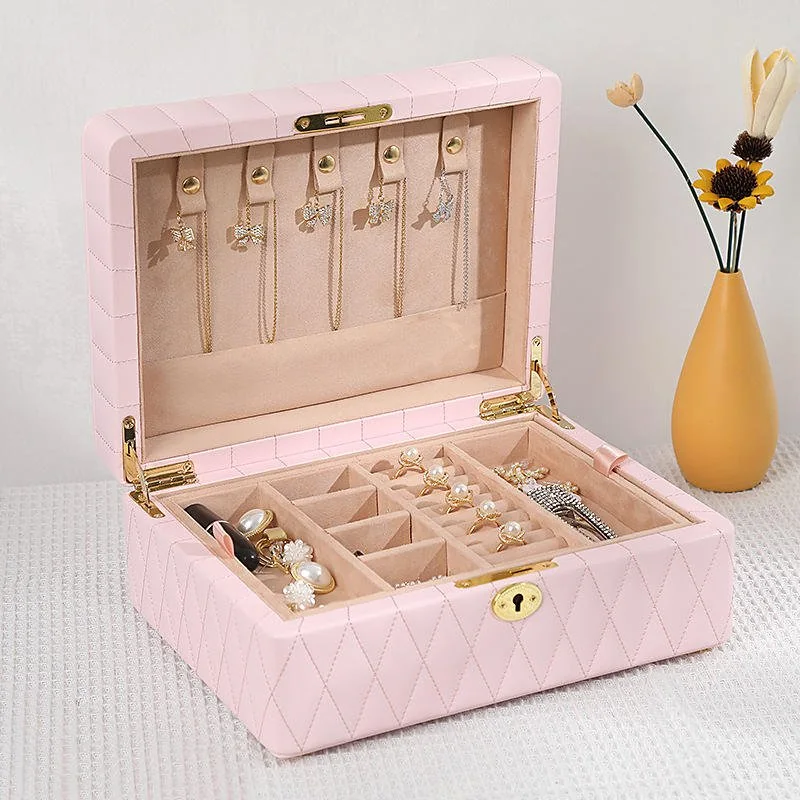
When one box has to do both
The usual compromise is a display look on the outside, a storing layout inside, and a lid that opens far enough to reach the contents. Expect to pay for both: the outer is finished like a display piece and the insert is built like a storage tray, and the box ends up slightly taller than a display-only design.
Inserts decide the cost
On most jewelry boxes the insert is the largest single line after the case itself. A die-cut foam tray with a velvet cover is quoted per shape, and a new layout means new tooling. Keep inserts consistent across a range and the whole range gets cheaper.
Send the pieces the box has to hold — the interior layout is worth settling before the outside is quoted.
What to send us. The product, who uses it, what goes inside, how it is branded, the quantity you actually need, and the date it has to be in hand. Quotes usually go out within one to two working days, with the sampling date confirmed in the same reply.
Send it through the quote form — drawings, a sample photo or a link all work. We will sign an NDA before you share anything confidential.