Coin & Stamp Albums
Coin Collection Album with Clear Pockets
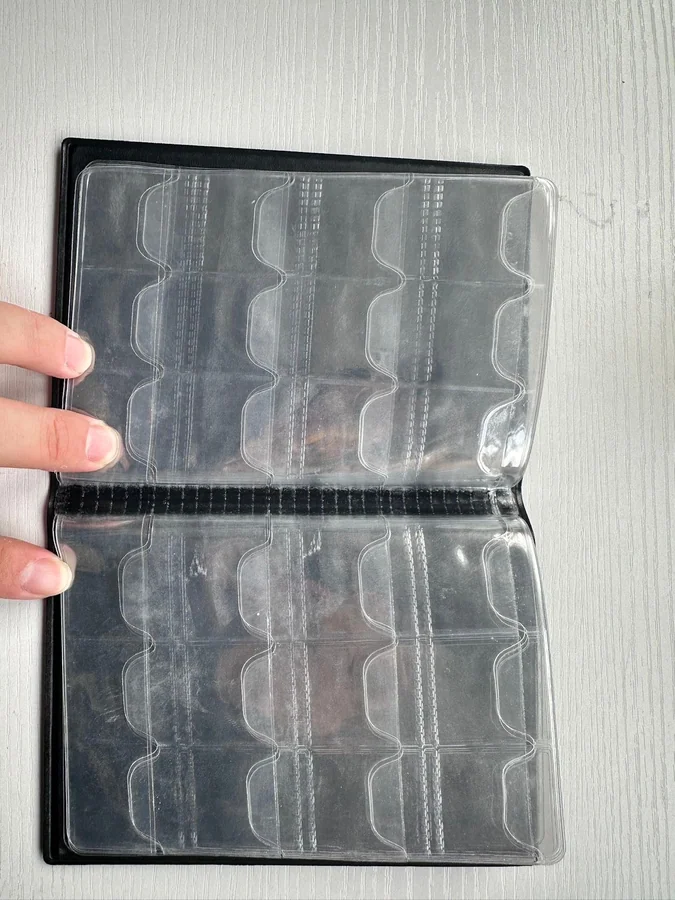
A coin collection album with clear pockets, so coins are held in place and readable on both faces without being handled. The clear pocket is the specification: a coin collection that has to be taken out to be examined will not stay in good condition.
- Clear pockets
- Held in position
- Sized to the coin
- Cover title
| Material | PU leather, board or PVC, with clear pockets |
|---|---|
| Size | Made to your collection format |
| MOQ | from 300 pcs |
| Lead time | 7–10 days sample · 25–35 days bulk |
Key data
Specs buyers ask first
| MOQ | 300 pieces portfolios · gift sets · sample books 500 pieces notebooks · ring binders · presentation packaging |
|---|---|
| Sample lead time | 7–10 days |
| Bulk lead time | 25–35 days |
| Quotation | Within one working day |
| Material | PU leather over rigid board · EVA or suede inserts |
|---|---|
| Imprint options | Foil stamping · debossing · screen print · metal badge |
| Artwork | Vector files (AI, EPS, PDF or CDR) |
| Size | Made to your dimensions |
What this one is
Album with clear coin pockets
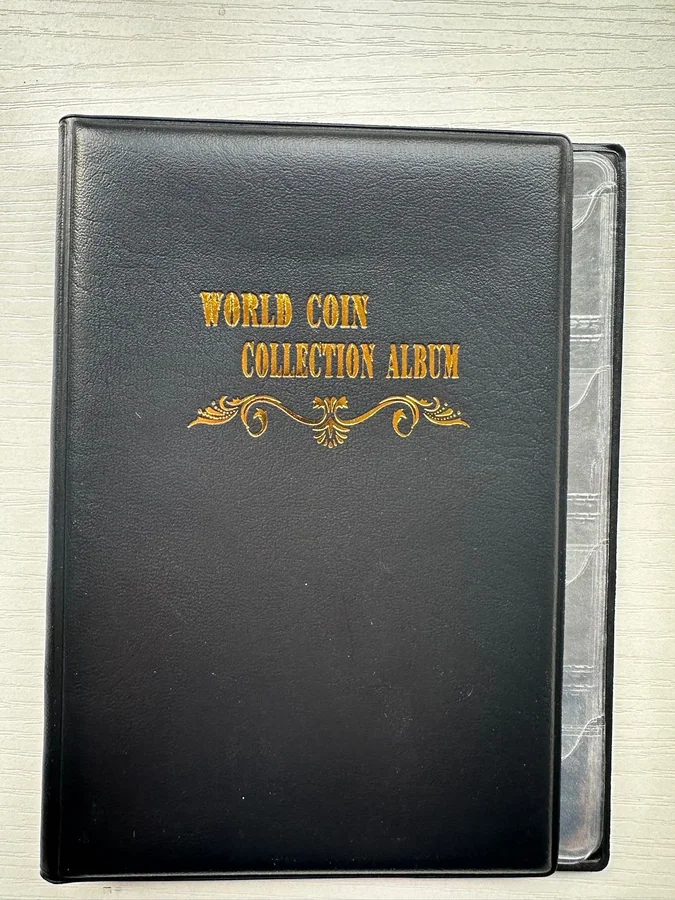
The album is built with clear pockets or sleeves sized to the coin diameter, arranged in rows on each page. Because the pockets are transparent, both faces of a coin can be examined without touching it, which is the reason a collector uses an album rather than a tray. The pockets hold the coin in position so it does not slide between pages. Pocket diameter, coins per page and page count are specified to the collection, and the cover takes a printed or foiled title.
- Clear pockets — Both faces examined without touching the coin.
- Held in position — Coins do not slide between pages.
- Sized to the coin — Pocket diameter set to the denominations collected.
- Cover title — Printed or foiled title on the album cover.
Where it gets used
Who buys coin albums
Coin dealers use them for stock and for showing a collection to a buyer. Collectors use them because handling is what damages a coin. Mints and numismatic suppliers use them as a retail product and a presentation item. The clear pocket is the reason for choosing an album over a tray or a box.
What we can change for you
Made to protect what is stored inside
This item is not picked off a shelf. Every part of it is specified before it is made, and these are the parts buyers change most often on a coin & stamp albums programme. Send whatever you have — a drawing, a photo of a sample you like, or a rough sketch — and we quote against it.
- Page format — Fixed pages, refillable leaves, or a ring binder taking standard leaves.
- Pocket type — Clear pockets sized to the coin, stamp or note, with or without a printed backing sheet.
- Cover — PU leather, board, cloth or PVC, with foiling or an engraved plate.
- Leaf count — Number of leaves and pockets per leaf, set to the collection size.
- Protection — Pocket film selected so it does not react with the item stored in it.
- Packing — Individual box, slipcase, printed sleeve or carton only.
Anything not on this list is a question rather than a no. We work from your artwork or a rough sketch, and cutting dies and covers are engineered in-house — so a change costs you a conversation, not a new supplier.
How your order is made
Tooling, printing and binding on our own line
The pocket film is the whole product here — the album is judged on whether the contents are still in the condition they went in. Film is selected for the item being stored, then cut and welded on our own line.
- Tooling and dies — cutting dies and covers are engineered in-house, so a change to the shape is a conversation rather than a new supplier.
- Printing and finishing — offset and screen printing, foil stamping, blind debossing, spot UV and edge painting all run on site.
- In-line QC — checks at cutting, stitching and packing, not only at the end. You get the inspection photos before the cartons close.
- Export and documentation — cartons, pallets, labelling and shipping documents prepared to your forwarder specification. 94.8% of what we make is exported.
Sampling
7–10 days
Production
25–35 days
Incoterms
FOB · CIF · DDP
Documents
one set per order
Factory audit report, material test reports and the pre-shipment inspection report are available on request — tell us which one your compliance team needs and we confirm it in writing.
How to order
From spec to shipment in four steps
Most buyers have a sketch, a sample, or a brief. We turn it into a confirmed sample and then into a repeatable production run.
Product type, dimensions, quantity, logo, and deadline — even a photo is enough.
Unit price, tooling, sample cost, and lead time — usually within one working day.
We make a physical sample for your review before anything goes to bulk.
In-line QC, pre-shipment photos, then packed and shipped to your forwarder.
Production & Quality
Built on our own line
Tooling, printing, finishing and packing all run in-house, so a change is a conversation rather than a new supplier.
Tooling and dies
Cutting dies and covers are engineered in-house, so a shape change is a conversation, not a new supplier.
Printing and finishing
Offset and screen printing, foil stamping, blind debossing, spot UV and edge painting all run on site.
In-line QC
Checks at cutting, stitching and packing, not only at the end. You get inspection photos before the cartons close.
Export packing
Cartons, pallets, labelling and shipping documents prepared to your forwarder specification.
Working with us
Files, tooling and terms
The same terms apply to this item and to the rest of your order, so the budget and the schedule can be planned before anything is committed.
- Artwork — Vector files (AI, EPS, PDF or CDR) are what embossing, foil and screen print need. A photo, a sketch or a physical sample is enough to start — we tell you before anything is charged if a file has to be rebuilt.
- Tooling — Charged only when the item needs a new mould, die or deboss plate. It is quoted separately and stated upfront — never added later.
- Samples — A stock sample is free (you cover the courier). A customised sample is chargeable and the cost is credited against the production order once it is confirmed.
- Payment — Invoiced in US dollars from our company account. Standard terms are T/T — 30% deposit, 70% before shipment — or an L/C at sight for container orders.
- Shipping — FOB Ningbo or Shanghai, CIF, and DDP to Europe and North America. DDP includes duties and final-mile delivery.
- Mixed containers — Several categories can ship in one container, which is how buyers keep the quantity per item down while still filling a shipment.
- Confidentiality — We sign an NDA before you send drawings.
- Documents — One inspection report and one set of documents cover the whole order, whatever the mix of items.
Buyer questions
What coin diameters fit?
Pocket diameter is set to the denominations you collect. Tell us the sizes and we specify the pockets.
How many coins per page?
Coins per page and page count are specified to the collection size.
Can the cover be branded?
Yes. A printed or foil title can be applied to the cover.
Will the pockets damage the coins or the stamps?
A collectible that has sat in the wrong sleeve does not look damaged until it is taken out — the plastic has reacted with the surface rather than scratched it. Tell us what is going in and we will select a film that will not migrate.
Can we add leaves later?
Yes, in a ring or refillable format. A fixed-page album is closed at binding, so choose refillable if the collection will grow.
Can each pocket be sized differently?
Yes. Mixed pocket sizes on one leaf are routine, and the layout is set at the proofing stage.
What is the minimum order quantity?
Minimums are set per item and depend on material, pocket layout and tooling. The figure above is the starting point; the exact minimum is confirmed with your quote.
Can the album carry a printed data sheet behind each pocket?
Yes. Printed backing sheets with your layout, in your language, are a common request for this line.
From our workshop notes
Request a quote
Send us the spec. We'll send a number.
Unit price, tooling cost and lead time — usually within one working day.
Request a quoteWhat to send us
- Product type and target dimensions
- Quantity — and whether it may grow
- Logo and artwork, even if rough
- Your delivery deadline and market