Color & Shade Cards
Promotional Brochure Catalog Sample Booklet Loose-leaf Binde
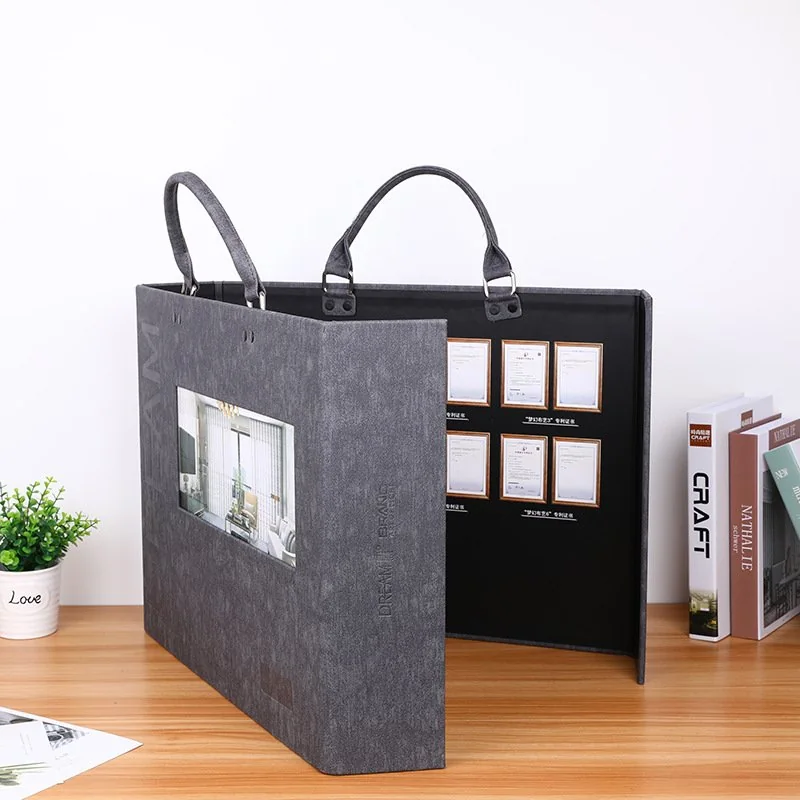
A promotional brochure and catalogue sample booklet in a loose-leaf binder, so pages can be updated or reordered as a range changes. The loose-leaf format is the specification: it is what lets a catalogue be maintained rather than replaced.
- Loose-leaf pages
- Maintained, not replaced
- Printed cover and spine
- Page size and mechanism to spec
| Material | Metal |
|---|---|
| Size | Made to your dimensions |
| MOQ | from 300 pcs |
| Lead time | 7–10 days sample · 25–35 days bulk |
Key data
Specs buyers ask first
| MOQ | 300 pieces portfolios · gift sets · sample books 500 pieces notebooks · ring binders · presentation packaging |
|---|---|
| Sample lead time | 7–10 days |
| Bulk lead time | 25–35 days |
| Quotation | Within one working day |
| Material | PU leather over rigid board · EVA or suede inserts |
|---|---|
| Imprint options | Foil stamping · debossing · screen print · metal badge |
| Artwork | Vector files (AI, EPS, PDF or CDR) |
| Size | Made to your dimensions |
What this one is
Loose-leaf catalogue binder
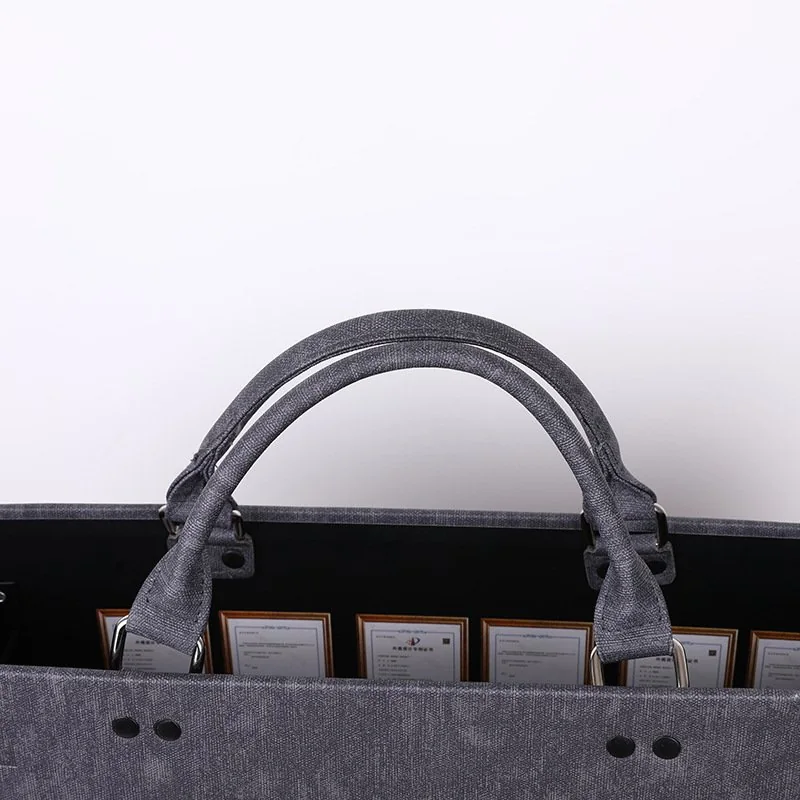
Pages are held on a mechanism rather than bound, so a price change, a new product or a discontinued line means replacing or removing a page instead of reprinting the catalogue. That is the reason this format is used for trade catalogues and product sample booklets: the content changes more often than the binder wears out. The binder takes a printed cover and a printed spine so a shelf of catalogues is identifiable. Page size, mechanism and cover finish are specified to order.
- Loose-leaf pages — A price change replaces one page, not the whole catalogue.
- Maintained, not replaced — Content changes more often than the binder wears out.
- Printed cover and spine — Identifiable on a shelf without opening it.
- Page size and mechanism to spec — Sheet format and ring type specified to your layout.
Where it gets used
Where a loose-leaf catalogue is used
Trade suppliers issue them to distributors and agents, who need current pricing all year. Manufacturers use them for product ranges where lines are added and discontinued. Sales teams carry them to accounts and update pages on the road. The maintenance aspect is the reason for choosing loose-leaf over a bound catalogue.
What we can change for you
Your real materials, on your card
This item is not picked off a shelf. Every part of it is specified before it is made, and these are the parts buyers change most often on a color & shade cards programme. Send whatever you have — a drawing, a photo of a sample you like, or a rough sketch — and we quote against it.
- Format — Fan deck, booklet, loose-leaf binder, wall chart, hanging swatch card or a boxed set.
- Card stock — Paper, board, laminated board, PU, fabric, TPU, metal or PVC, in the weight you specify.
- Sample attachment — Stapled, glued, riveted, sewn, die-cut window or a removable swatch.
- Layout — Colour name, code, texture name and technical data printed to your layout, in your language.
- Binding — Rivet, screw post, ring, spiral or loose sheets with a punch pattern you choose.
- Packing — Boxed set, printed sleeve, shrink wrap or carton only.
Anything not on this list is a question rather than a no. We work from your artwork or a rough sketch, and cutting dies and covers are engineered in-house — so a change costs you a conversation, not a new supplier.
How your order is made
Tooling, printing and binding on our own line
Every swatch card is a physical sample, so the cutting and attaching are done by hand where the material demands it. Codes and names are printed to your list and proofed before the run.
- Tooling and dies — cutting dies and covers are engineered in-house, so a change to the shape is a conversation rather than a new supplier.
- Printing and finishing — offset and screen printing, foil stamping, blind debossing, spot UV and edge painting all run on site.
- In-line QC — checks at cutting, stitching and packing, not only at the end. You get the inspection photos before the cartons close.
- Export and documentation — cartons, pallets, labelling and shipping documents prepared to your forwarder specification. 94.8% of what we make is exported.
Sampling
7–10 days
Production
25–35 days
Incoterms
FOB · CIF · DDP
Documents
one set per order
Factory audit report, material test reports and the pre-shipment inspection report are available on request — tell us which one your compliance team needs and we confirm it in writing.
How to order
From spec to shipment in four steps
Most buyers have a sketch, a sample, or a brief. We turn it into a confirmed sample and then into a repeatable production run.
Product type, dimensions, quantity, logo, and deadline — even a photo is enough.
Unit price, tooling, sample cost, and lead time — usually within one working day.
We make a physical sample for your review before anything goes to bulk.
In-line QC, pre-shipment photos, then packed and shipped to your forwarder.
Production & Quality
Built on our own line
Tooling, printing, finishing and packing all run in-house, so a change is a conversation rather than a new supplier.
Tooling and dies
Cutting dies and covers are engineered in-house, so a shape change is a conversation, not a new supplier.
Printing and finishing
Offset and screen printing, foil stamping, blind debossing, spot UV and edge painting all run on site.
In-line QC
Checks at cutting, stitching and packing, not only at the end. You get inspection photos before the cartons close.
Export packing
Cartons, pallets, labelling and shipping documents prepared to your forwarder specification.
Working with us
Files, tooling and terms
The same terms apply to this item and to the rest of your order, so the budget and the schedule can be planned before anything is committed.
- Artwork — Vector files (AI, EPS, PDF or CDR) are what embossing, foil and screen print need. A photo, a sketch or a physical sample is enough to start — we tell you before anything is charged if a file has to be rebuilt.
- Tooling — Charged only when the item needs a new mould, die or deboss plate. It is quoted separately and stated upfront — never added later.
- Samples — A stock sample is free (you cover the courier). A customised sample is chargeable and the cost is credited against the production order once it is confirmed.
- Payment — Invoiced in US dollars from our company account. Standard terms are T/T — 30% deposit, 70% before shipment — or an L/C at sight for container orders.
- Shipping — FOB Ningbo or Shanghai, CIF, and DDP to Europe and North America. DDP includes duties and final-mile delivery.
- Mixed containers — Several categories can ship in one container, which is how buyers keep the quantity per item down while still filling a shipment.
- Confidentiality — We sign an NDA before you send drawings.
- Documents — One inspection report and one set of documents cover the whole order, whatever the mix of items.
Buyer questions
Can pages be replaced later?
Yes. The loose-leaf mechanism lets pages be replaced or reordered without reprinting the catalogue.
Can the spine be printed?
Yes. Cover and spine are printed so the catalogue is identifiable on a shelf.
What mechanism is used?
Ring or post mechanisms are both produced. Tell us how often pages change and we recommend one.
Can each card carry a different real material?
Yes — that is the point of a shade card. Send the material pieces or their specifications and we attach the actual material rather than a printed representation of it.
How do you keep the printed colour from drifting from the real material?
We match the printed code block to the physical swatch under the light you specify, and we keep an approved master. Reprints are matched to that master, not to a screen.
Can the card be updated without reprinting the whole set?
Yes. Loose-leaf and ring formats let you replace single cards, which is usually cheaper over a season than reprinting a bound deck.
What is the minimum order quantity?
Minimums are set per item, and a hand-attached card carries a higher minimum than a printed one. The exact figure is confirmed with your quote.
Can you supply the swatch book and the product it describes?
Yes. Colour cards and sample books are often part of the same programme as the goods, and both ship as one order.
From our workshop notes
Request a quote
Send us the spec. We'll send a number.
Unit price, tooling cost and lead time — usually within one working day.
Request a quoteWhat to send us
- Product type and target dimensions
- Quantity — and whether it may grow
- Logo and artwork, even if rough
- Your delivery deadline and market