File & Archive Boxes
Clear Plastic A4 File Box
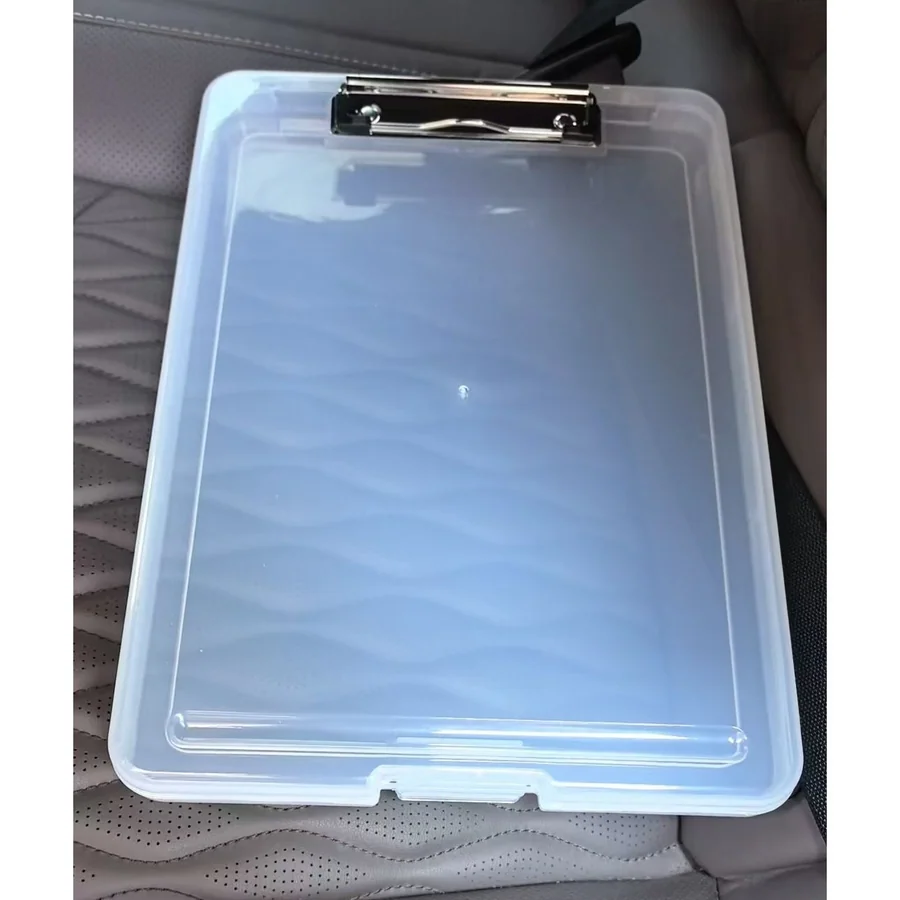
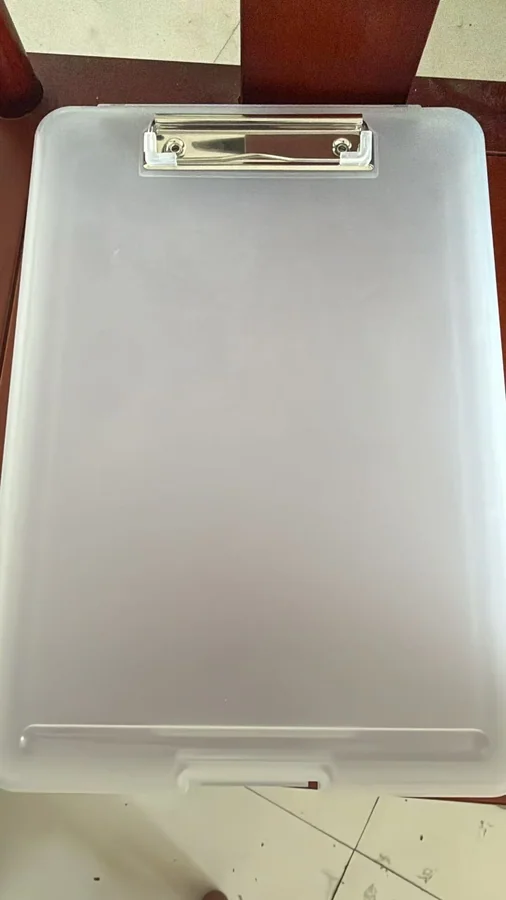
A clear plastic A4 file box, so the contents can be identified without opening it. The transparent body is the point: a stack of identical boxes can be read from the outside, which is what stops the label having to be checked on every one.
- Transparent body
- Sized for A4
- Label area
- Depth to spec
| Material | PVC |
|---|---|
| Size | A4 — or your own dimensions |
| MOQ | from 300 pcs |
| Lead time | 7–10 days sample · 25–35 days bulk |
Key data
Specs buyers ask first
| MOQ | 300 pieces portfolios · gift sets · sample books 500 pieces notebooks · ring binders · presentation packaging |
|---|---|
| Sample lead time | 7–10 days |
| Bulk lead time | 25–35 days |
| Quotation | Within one working day |
| Material | PU leather over rigid board · EVA or suede inserts |
|---|---|
| Imprint options | Foil stamping · debossing · screen print · metal badge |
| Artwork | Vector files (AI, EPS, PDF or CDR) |
| Size | Made to your dimensions |
What this one is
Transparent A4 file box
The box is moulded in clear plastic with a lid that closes over the top edge, sized to take A4 sheets and folders without bending them. Because the body is transparent, the top sheet or the spine of a folder is visible from outside, so a shelf of boxes can be worked through by sight rather than by opening each one. A label area is left clear on the front and the lid takes a printed insert. Box depth and lid type are specified to the quantity being stored.
- Transparent body — Contents identified from outside without opening the box.
- Sized for A4 — Takes sheets and folders without bending them.
- Label area — Clear front panel and a printable lid insert.
- Depth to spec — Box depth set to the quantity stored.
Where it gets used
Who uses clear A4 file boxes
Offices use them where records are stored on open shelving and have to be identified quickly. Archives use them for document sets that are retrieved periodically. Warehouses and workshops use them for paperwork kept near the work area. The transparency is the reason for choosing a clear box over an opaque archive box.
What we can change for you
Made to be stacked, opened and moved
This item is not picked off a shelf. Every part of it is specified before it is made, and these are the parts buyers change most often on a file & archive boxes programme. Send whatever you have — a drawing, a photo of a sample you like, or a rough sketch — and we quote against it.
- Format — Stackable drawer box, lidded archive box, clear-front box, or a wooden presentation archive.
- Material — Clear PVC or PP, rigid greyboard with a printed wrap, or wood.
- Lid — Lift-off lid, hinged lid, sliding tray, clear window or a dust flap.
- Interior — Loose, with dividers, with hanging-file rails, or with a removable tray.
- Branding — Printed wrap, foil, screen print, printed front label window or an engraved plate.
- Packing — Knocked flat or assembled, poly bag, carton and pallet labelling.
Anything not on this list is a question rather than a no. We work from your artwork or a rough sketch, and cutting dies and covers are engineered in-house — so a change costs you a conversation, not a new supplier.
How your order is made
Tooling, printing and binding on our own line
A clear box is judged on how clear it stays, whether the hinge survives being opened, and whether the edges are welded or stitched — all three start with the material, so we select the sheet before the shape.
- Tooling and dies — cutting dies and covers are engineered in-house, so a change to the shape is a conversation rather than a new supplier.
- Printing and finishing — offset and screen printing, foil stamping, blind debossing, spot UV and edge painting all run on site.
- In-line QC — checks at cutting, stitching and packing, not only at the end. You get the inspection photos before the cartons close.
- Export and documentation — cartons, pallets, labelling and shipping documents prepared to your forwarder specification. 94.8% of what we make is exported.
Sampling
7–10 days
Production
25–35 days
Incoterms
FOB · CIF · DDP
Documents
one set per order
Factory audit report, material test reports and the pre-shipment inspection report are available on request — tell us which one your compliance team needs and we confirm it in writing.
How to order
From spec to shipment in four steps
Most buyers have a sketch, a sample, or a brief. We turn it into a confirmed sample and then into a repeatable production run.
Product type, dimensions, quantity, logo, and deadline — even a photo is enough.
Unit price, tooling, sample cost, and lead time — usually within one working day.
We make a physical sample for your review before anything goes to bulk.
In-line QC, pre-shipment photos, then packed and shipped to your forwarder.
Production & Quality
Built on our own line
Tooling, printing, finishing and packing all run in-house, so a change is a conversation rather than a new supplier.
Tooling and dies
Cutting dies and covers are engineered in-house, so a shape change is a conversation, not a new supplier.
Printing and finishing
Offset and screen printing, foil stamping, blind debossing, spot UV and edge painting all run on site.
In-line QC
Checks at cutting, stitching and packing, not only at the end. You get inspection photos before the cartons close.
Export packing
Cartons, pallets, labelling and shipping documents prepared to your forwarder specification.
Working with us
Files, tooling and terms
The same terms apply to this item and to the rest of your order, so the budget and the schedule can be planned before anything is committed.
- Artwork — Vector files (AI, EPS, PDF or CDR) are what embossing, foil and screen print need. A photo, a sketch or a physical sample is enough to start — we tell you before anything is charged if a file has to be rebuilt.
- Tooling — Charged only when the item needs a new mould, die or deboss plate. It is quoted separately and stated upfront — never added later.
- Samples — A stock sample is free (you cover the courier). A customised sample is chargeable and the cost is credited against the production order once it is confirmed.
- Payment — Invoiced in US dollars from our company account. Standard terms are T/T — 30% deposit, 70% before shipment — or an L/C at sight for container orders.
- Shipping — FOB Ningbo or Shanghai, CIF, and DDP to Europe and North America. DDP includes duties and final-mile delivery.
- Mixed containers — Several categories can ship in one container, which is how buyers keep the quantity per item down while still filling a shipment.
- Confidentiality — We sign an NDA before you send drawings.
- Documents — One inspection report and one set of documents cover the whole order, whatever the mix of items.
Buyer questions
Does it take A4 without bending?
Yes. The box is sized to take A4 sheets and folders flat.
Can it be labelled?
Yes. There is a clear label area on the front and the lid insert can be printed.
Is the lid separate or hinged?
Both types are produced. Tell us which suits your shelving and we quote accordingly.
PVC or PP for a clear box?
Both are supplied, and they are not interchangeable. One stays clearer longer, the other takes a hinge better. Tell us whether the box will be handled daily or stored on a shelf and we will pick for that.
Will the corners crack if the box is opened a lot?
The hinge and the edge treatment decide that. Welded edges and a correctly radiused hinge outlast a stitched or sharp edge — we specify the radius rather than leaving it to the die.
Can the box carry our branding?
Yes. An archive box is bought by the dozen and used for years, and it is also the piece of packaging a visitor sees on a shelf. Printed wraps, foiled lids and engraved plates all work.
Can it be shipped flat to save freight?
Yes for board and some plastic formats. Tell us the freight profile you are working to and we will quote the knocked-flat option alongside the assembled one.
What is the minimum order quantity?
Minimums are set per item and depend on material, tooling and printing. The figure above is the starting point; the exact minimum is confirmed with your quote.
From our workshop notes
Request a quote
Send us the spec. We'll send a number.
Unit price, tooling cost and lead time — usually within one working day.
Request a quoteWhat to send us
- Product type and target dimensions
- Quantity — and whether it may grow
- Logo and artwork, even if rough
- Your delivery deadline and market