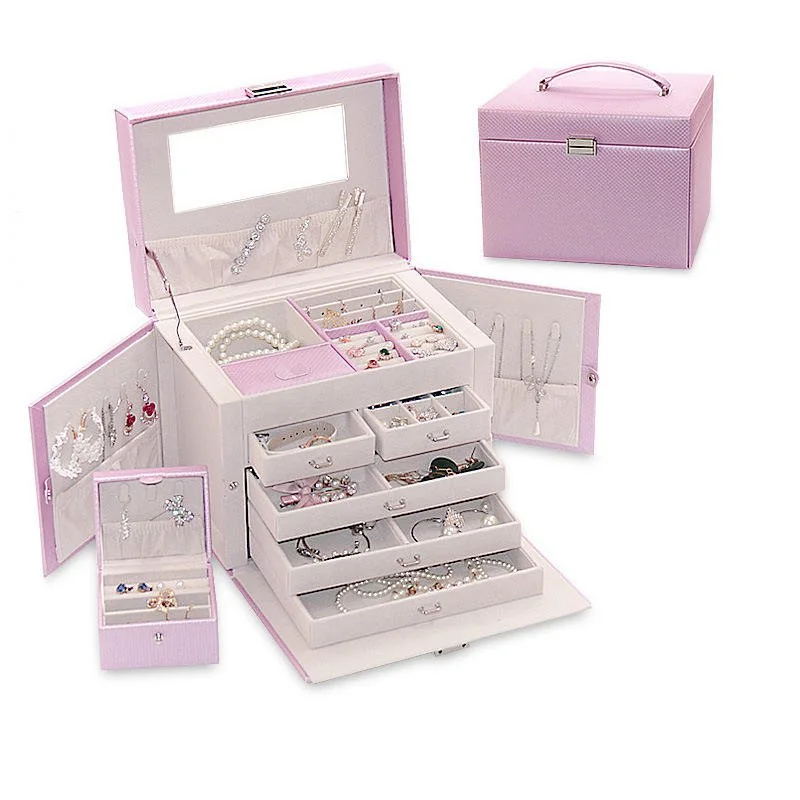
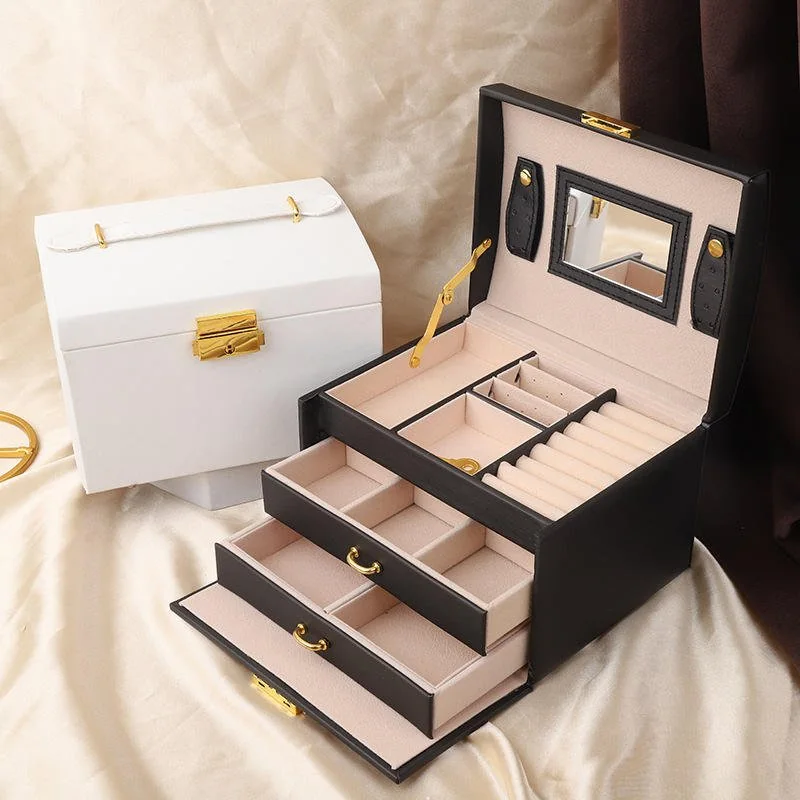
The number of drawers in a jewelry case is a decision about use, not about capacity. Here is how tier count changes what the case can do — and where the cost actually moves.
Tiers are about use, not capacity
A two-tier case and a six-tier case can hold similar volumes. What changes is how the contents are separated. If one person keeps a watch, a chain and two pairs of earrings, more tiers simply means more empty trays. If a retail counter stores a full collection, tiers become the filing system.
Two to three tiers: the everyday case
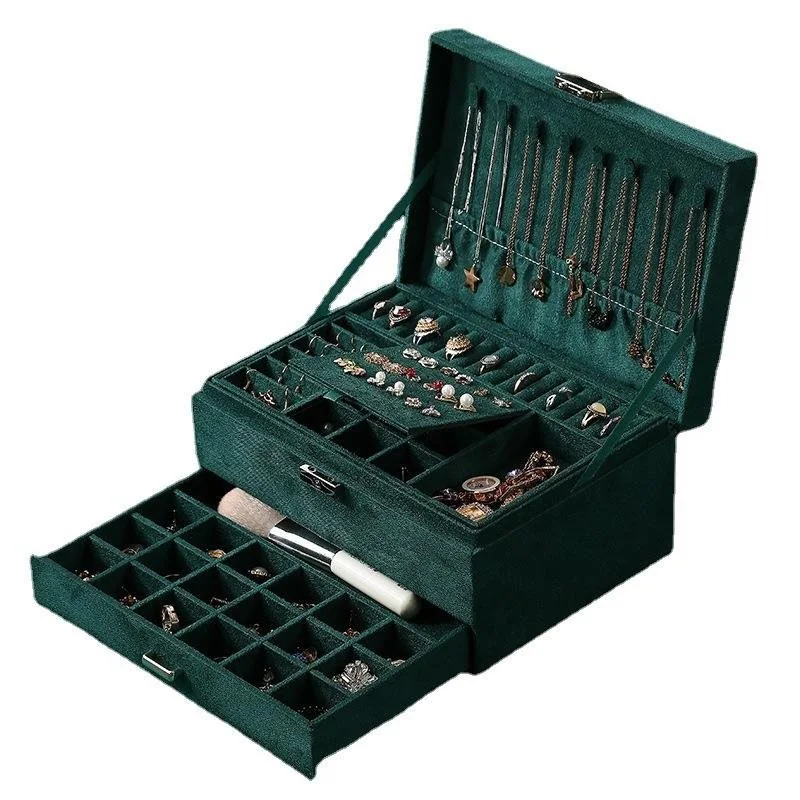
Two and three-tier cases suit a single owner. The usual layout is a ring or earring tray on top and a deeper compartment below for chains, watches or paperwork. This is the format most gifting programs settle on, because the case stays compact enough to sit on a dresser.
Most programs here start at 300 pieces, and the tier count is usually settled in the first conversation because it changes the insert rather than the carcass.
Five tiers and above: retail and travel
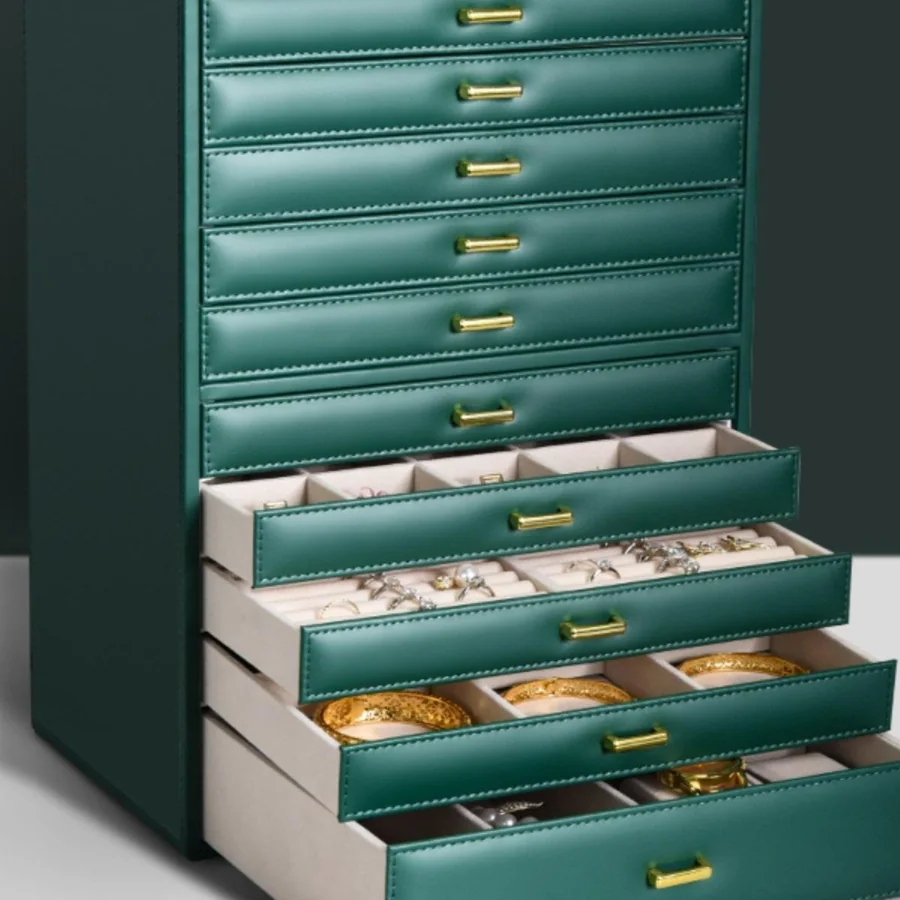
From five tiers the case becomes counter furniture or a working travel set. Drawers let staff pull one tray at a time without disturbing the rest, and each tier can carry its own insert — ring slots, watch pillows, or a plain velvet base for loose pieces.
Above ten tiers, weight and rigidity matter more than the box itself: the carcass has to stay square when the drawers are loaded.
What changes the price between tiers
Each tier adds a drawer front, a pair of runners and a tray, so cost rises close to linearly with tier count. The insert is the larger variable: die-cut foam and velvet-covered trays are quoted per shape, and a lockable case adds hardware across the whole carcass.
Send the layout you have in mind and the pieces it has to hold. The useful conversation is about the tier count that fits the use, not the largest case that can be built.
What to send us. The product, who uses it, what goes inside, how it is branded, the quantity you actually need, and the date it has to be in hand. Quotes usually go out within one to two working days, with the sampling date confirmed in the same reply.
Send it through the quote form — drawings, a sample photo or a link all work. We will sign an NDA before you share anything confidential.