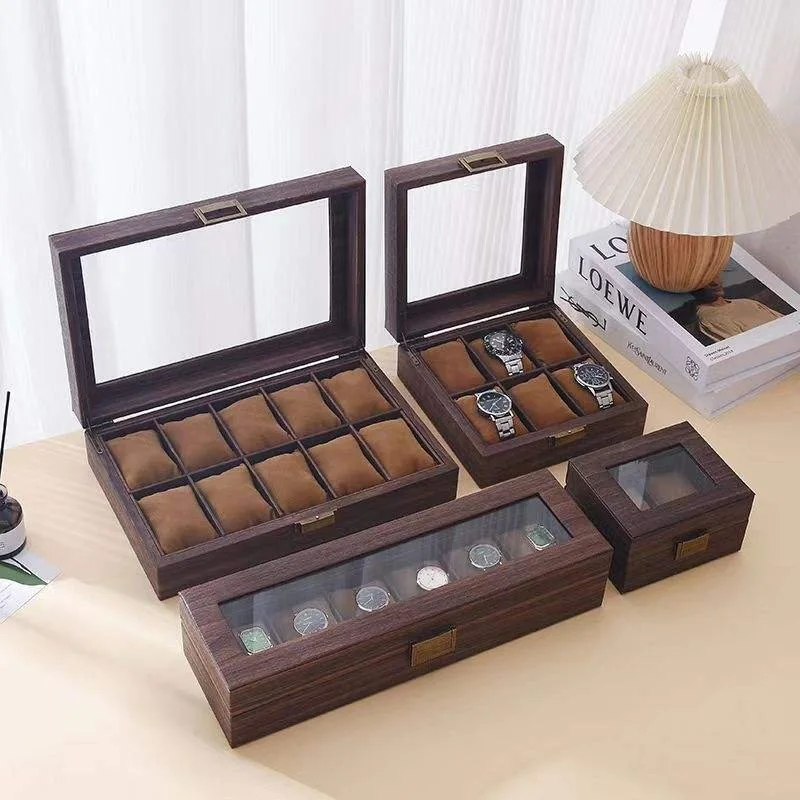
Read enough watch box reviews and the same sentence appears from opposite ends: the pillows are far too small and the watches rattle, or the pillows are too big and a bracelet will not close around one. Both complaints are correct.
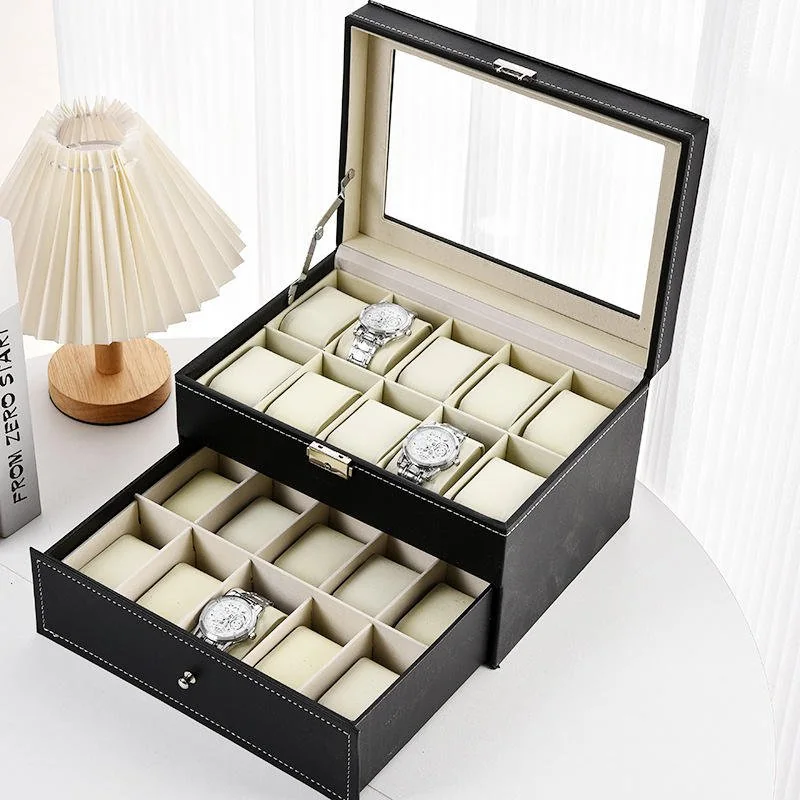
One pillow, every wrist
A watch pillow has to do three jobs at once: hold the watch still when the box is carried, let a bracelet or a strap close around it, and keep the case clear of the lid. A single diameter cannot do all three across a range that runs from a 36 mm dress watch on a leather strap to a 44 mm diver on a steel bracelet.
The squeeze is the tell. A pillow sized for a bracelet is too fat for a small wrist, so the clasp will not meet. A pillow sized for a small wrist leaves a bracelet loose, so the watch slides and the case knocks against the glass in transit.
What the pillow actually has to clear
Three dimensions matter, and most specifications carry only one. The first is the compressed diameter — how thick the pillow is once a strap is done up around it. The second is the slot pitch: the distance between pillow centers, which decides whether two large watches touch. The third is the headroom: the gap between the top of a cased watch and the underside of the lid, which is what stops a dive watch with a thick case back from resting on the glass.
The commonest version of the problem has a shape: a recess cut across the foot of the pillow. It gives the clasp somewhere to sit, so the watch drops a few millimetres instead of riding high — and that detail is often what decides whether the lid closes on a thick case back.
Why a set of pillows beats one size
One way out is to stop treating the pillow as one part: a small, a medium and a large core, all cut to the same slot, so the buyer can match the pillow to the watch after the box has shipped. It adds to the unit, and how much depends on the foam and the tooling already on the shelf.
The second answer is a softer core. A lower-density foam will take a bracelet and still give enough on a smaller wrist; a firm foam holds its shape on a shelf and then refuses to close.
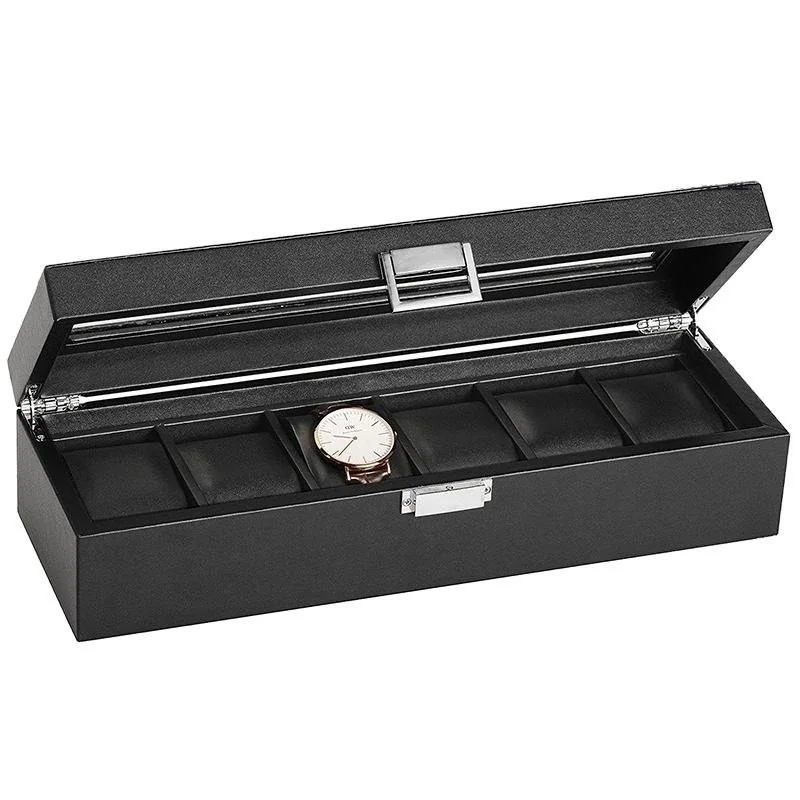
What to put in the brief
Send the watches, or the numbers. Case diameter including the crown, case thickness, whether it is a strap or a bracelet, and the wrist size the box is for.
State slot pitch and headroom as separate figures, not as a single "fits up to 44 mm".
Say whether the box will be carried. A box that stays on a shelf needs less grip than one that travels.
Ask for the pillow density, and for one pillow in each size before the run.
Better to raise it than to hope. Tell us which part you are worried about — the lining, the pillow, the ring mechanism, the material code, the fold line — and we will say plainly what can be changed, roughly what it costs, and where we would be guessing too. Being told early that a detail is out of reach is cheaper than finding out at the inspection.
We still need the product, the quantity, the logo method and your deadline in order to quote. Send it through the quote form — a drawing, a sample photo or a link all work. We will sign an NDA before you share anything confidential.