Page Protectors & Refills
A5 6-Hole Zipper Page Protectors
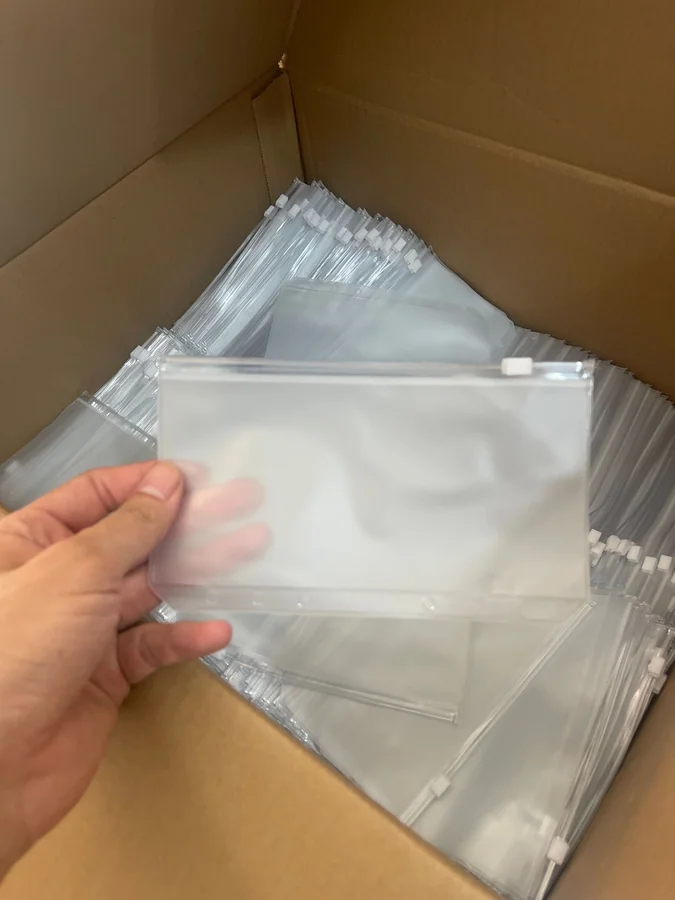
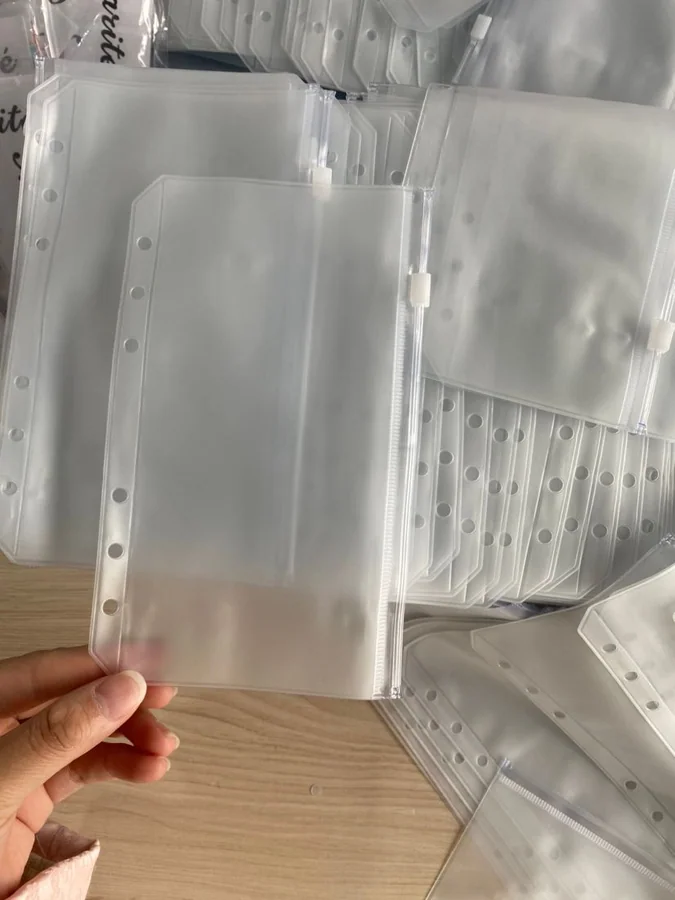
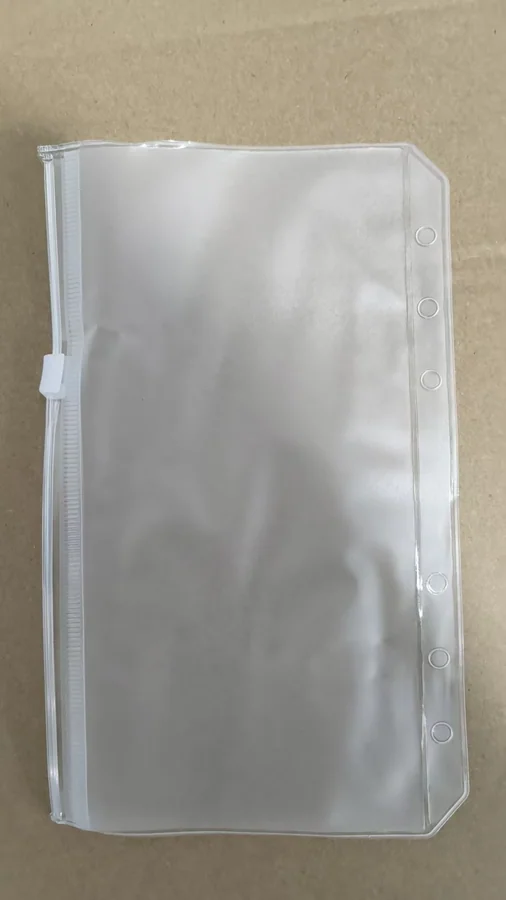
A5 page protectors punched with six holes and closed with a zip along the top, so the contents cannot fall out when the binder is carried. The zip is what separates this from an open sleeve: it is used where small loose items travel inside the page as well as paper.
- Zip closure
- Six-hole A5 punch
- Clear film
- Zip clear of rings
| Material | PVC |
|---|---|
| Size | A5 — or your own dimensions |
| MOQ | from 300 pcs |
| Lead time | 7–10 days sample · 25–35 days bulk |
Key data
Specs buyers ask first
| MOQ | 300 pieces portfolios · gift sets · sample books 500 pieces notebooks · ring binders · presentation packaging |
|---|---|
| Sample lead time | 7–10 days |
| Bulk lead time | 25–35 days |
| Quotation | Within one working day |
| Material | PU leather over rigid board · EVA or suede inserts |
|---|---|
| Imprint options | Foil stamping · debossing · screen print · metal badge |
| Artwork | Vector files (AI, EPS, PDF or CDR) |
| Size | Made to your dimensions |
What this one is
Zippered A5 protectors
The sleeve is punched for an A5 six-ring mechanism and closed with a zip along the opening edge. That makes it suitable for holding small items alongside the sheet — a sample, a card, coins or loose offcuts — without them escaping when the binder is moved. The film is clear so the contents remain readable, and the zip pull sits clear of the ring holes so it does not foul the mechanism. Punch pattern, film thickness and zip colour are specified to order.
- Zip closure — Small loose items travel inside the page without falling out.
- Six-hole A5 punch — Matches the A5 six-ring mechanism.
- Clear film — Contents stay readable with the page closed.
- Zip clear of rings — Pull positioned so it does not foul the mechanism.
Where it gets used
Where zippered protectors are used
Sample binders use them to carry a physical sample alongside its specification sheet. Educational suppliers use them for loose parts and card sets. Collectors use them for coins and small items that would fall out of an open sleeve. The zip is the reason for choosing this over a plain protector.
What we can change for you
Made for what must stay readable
This item is not picked off a shelf. Every part of it is specified before it is made, and these are the parts buyers change most often on a page protectors & refills programme. Send whatever you have — a drawing, a photo of a sample you like, or a rough sketch — and we quote against it.
- Punch pattern — 2, 3, 4, 6, 7 or 11-hole punched to your binder mechanism, with the hole pitch matched.
- Sheet gauge — Film thickness specified so the sleeve does not stick to the page or bow the binder.
- Format — Open top, top-loading with a flap, side-loading, zippered, or a pocket with a card slot.
- Finish — Clear, frosted, anti-glare or UV-resistant where the contents must stay readable.
- Printing — Printed index strip, printed header or a coloured edge for section coding.
- Packing — Poly bag, retail box, printed header or carton only.
Anything not on this list is a question rather than a no. We work from your artwork or a rough sketch, and cutting dies and covers are engineered in-house — so a change costs you a conversation, not a new supplier.
How your order is made
Tooling, printing and binding on our own line
Film gauge and hole pitch are chosen together with the binder, so the sleeve sits flat and does not pull the rings out of line. Clear film is cut and welded on our own line.
- Tooling and dies — cutting dies and covers are engineered in-house, so a change to the shape is a conversation rather than a new supplier.
- Printing and finishing — offset and screen printing, foil stamping, blind debossing, spot UV and edge painting all run on site.
- In-line QC — checks at cutting, stitching and packing, not only at the end. You get the inspection photos before the cartons close.
- Export and documentation — cartons, pallets, labelling and shipping documents prepared to your forwarder specification. 94.8% of what we make is exported.
Sampling
7–10 days
Production
25–35 days
Incoterms
FOB · CIF · DDP
Documents
one set per order
Factory audit report, material test reports and the pre-shipment inspection report are available on request — tell us which one your compliance team needs and we confirm it in writing.
How to order
From spec to shipment in four steps
Most buyers have a sketch, a sample, or a brief. We turn it into a confirmed sample and then into a repeatable production run.
Product type, dimensions, quantity, logo, and deadline — even a photo is enough.
Unit price, tooling, sample cost, and lead time — usually within one working day.
We make a physical sample for your review before anything goes to bulk.
In-line QC, pre-shipment photos, then packed and shipped to your forwarder.
Production & Quality
Built on our own line
Tooling, printing, finishing and packing all run in-house, so a change is a conversation rather than a new supplier.
Tooling and dies
Cutting dies and covers are engineered in-house, so a shape change is a conversation, not a new supplier.
Printing and finishing
Offset and screen printing, foil stamping, blind debossing, spot UV and edge painting all run on site.
In-line QC
Checks at cutting, stitching and packing, not only at the end. You get inspection photos before the cartons close.
Export packing
Cartons, pallets, labelling and shipping documents prepared to your forwarder specification.
Working with us
Files, tooling and terms
The same terms apply to this item and to the rest of your order, so the budget and the schedule can be planned before anything is committed.
- Artwork — Vector files (AI, EPS, PDF or CDR) are what embossing, foil and screen print need. A photo, a sketch or a physical sample is enough to start — we tell you before anything is charged if a file has to be rebuilt.
- Tooling — Charged only when the item needs a new mould, die or deboss plate. It is quoted separately and stated upfront — never added later.
- Samples — A stock sample is free (you cover the courier). A customised sample is chargeable and the cost is credited against the production order once it is confirmed.
- Payment — Invoiced in US dollars from our company account. Standard terms are T/T — 30% deposit, 70% before shipment — or an L/C at sight for container orders.
- Shipping — FOB Ningbo or Shanghai, CIF, and DDP to Europe and North America. DDP includes duties and final-mile delivery.
- Mixed containers — Several categories can ship in one container, which is how buyers keep the quantity per item down while still filling a shipment.
- Confidentiality — We sign an NDA before you send drawings.
- Documents — One inspection report and one set of documents cover the whole order, whatever the mix of items.
Buyer questions
What loose items can it hold?
The sleeve is sized for a sheet plus small items — a sample, card or coins. Tell us the thickness needed and we confirm.
Does the zip fit the binder?
Yes. The zip pull sits clear of the ring holes so it does not foul the mechanism.
Can the zip colour be specified?
Yes. Zip tape and pull colour are specified to order.
Will the sleeve damage what I put inside it?
A card or a photograph that has sat in the wrong sleeve does not look damaged until it is taken out — the plastic has reacted with it rather than scratched it. Tell us what goes inside and we will select a film that will not migrate.
How do I choose the film thickness?
Thin film sticks to the page and bows in a full binder; heavy film adds bulk and weight. Tell us the page count and how often the binder is opened and we will specify the gauge.
Can the punch pattern match a binder we already use?
Yes. Send the hole pitch and diameter, or a used sheet, and we will match it. A mismatched pitch is the most common reason a refill gets returned.
What is the minimum order quantity?
Minimums are set per item; low unit-price accessories such as refills carry a higher minimum than leather programmes. The exact figure is confirmed with your quote.
Can the sheets be supplied with printed section tabs?
Yes. Printed index strips and coloured edges are routine, and we will match the tab positions to the dividers we supply.
From our workshop notes
Request a quote
Send us the spec. We'll send a number.
Unit price, tooling cost and lead time — usually within one working day.
Request a quoteWhat to send us
- Product type and target dimensions
- Quantity — and whether it may grow
- Logo and artwork, even if rough
- Your delivery deadline and market