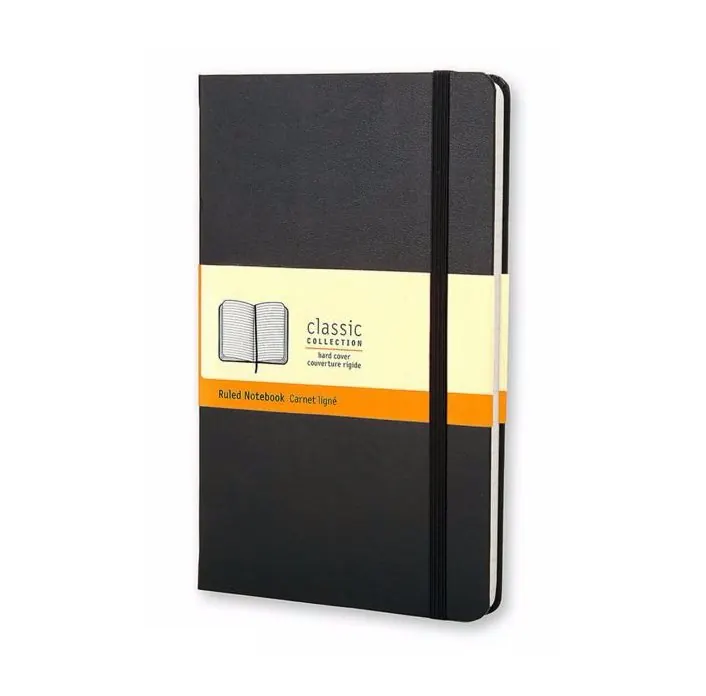
01 — The brief
A housewares brand sells into kitchen retail — the kind of shop where a customer picks a notebook up off a table and opens it. Their existing recipe journal was a licensed import with two problems: it would not stay open, and the cover picked up everything the kitchen threw at it.
They wanted 8,000 units, a cover that could be wiped clean, and one non-negotiable requirement: the book must lie flat at any page. A recipe you have to hold open with a jar is a recipe nobody uses standing up.
02 — The hard part
The binding, not the cover. Perfect binding — the glue-and-spine method most notebooks use — fights you here. The spine adhesive is stiff, so the book closes itself. Ask a perfect-bound book to lie open at page 60 and it will lift off the counter by two centimetres and slowly close while you are measuring flour.
Lay-flat is achievable, but every route costs something:
| Route | Lies flat | Cost | Catch |
|---|---|---|---|
| Perfect bound | No | Cheapest | Closes itself — disqualified |
| Section sewn | Mostly | Mid | Still resists at the middle of a section |
| Wire-O | Fully | Mid | Metal spiral; the premium kitchen category reads it as cheap |
| Exposed sewn spine + flexible PUR | Fully | Highest | Needs a slower two-pass binding line |
Then the cover failed its own test. The first proofs used a soft-touch matte laminate — lovely to hold, and it absorbed a smear of olive oil permanently within a day. Soft-touch is a texture, not a barrier.
03 — What we built
Binding. We moved to an exposed sewn spine: the sections are sewn through, then the spine is glued with a flexible PUR adhesive that stays elastic rather than going rigid. That elasticity is the whole trick — the book opens flat because the spine is allowed to move, not because it is stiff enough to stay put.
We prototyped all four routes before recommending one, and sent the client a physical comparison rather than a spec sheet. They chose the most expensive option, having held the alternative in their hands.
Cover. Switched from soft-touch matte to a matte anti-scuff laminate with a wipe-clean top surface. It loses a little of the velvet feel and gains the ability to be cleaned with a damp cloth. For a kitchen, that is the right trade.
Insides. The client’s layout put a photo panel opposite each recipe, which meant the pages had to be opaque. We used 120 gsm cream uncoated with sufficient opacity that the printed photo does not ghost through in daylight — thin uncoated stock is exactly where cheap recipe journals betray themselves.
04 — Production
8,000 units over three runs.
The sewn-spine pass is the bottleneck: it runs at roughly a third of the speed of the perfect-binding line, which is why the lead time sat at 26 days rather than the comfortable middle of our 15–30 day window.
QC targeted the property that actually matters — a lie-flat test: sample books from each run opened at three points (page 10, the centre, the final spread) and checked for self-closing over 60 seconds. Run three showed the page-44 spread lifting 3 mm, traced to a batch of PUR adhesive applied slightly under temperature. Those books were re-bound before they left the factory.
05 — Outcome
- Delivered in 26 days.
- Zero returns citing the book closing on its own — the previous supplier’s single most common complaint.
- The wipe-clean cover change was adopted across the client’s whole stationery line, not just this title.
- Reordered at 11,000 units for the following season.
The part worth repeating: we prototyped four binding methods for an 8,000-unit order. On a run that size it is arguably uneconomical. It was still the right call, because the client could not have chosen between “section sewn” and “exposed sewn spine” from a description — and choosing wrong would have meant 8,000 unusable books, which costs far more than four prototypes.