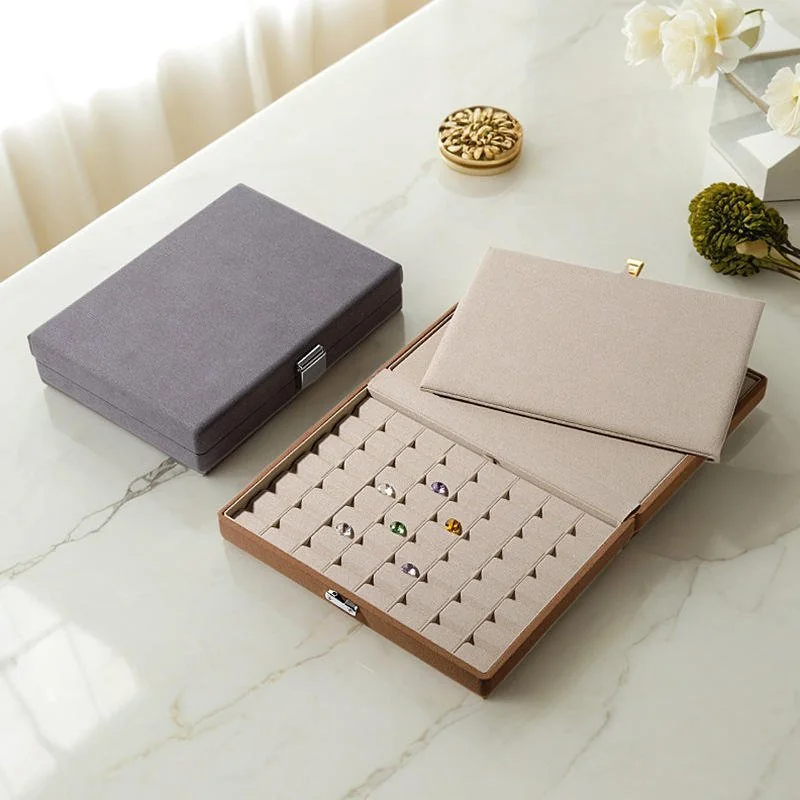
A lock on a jewelry case does two jobs: it keeps casual hands out, and it tells the buyer that this case was built to be kept.
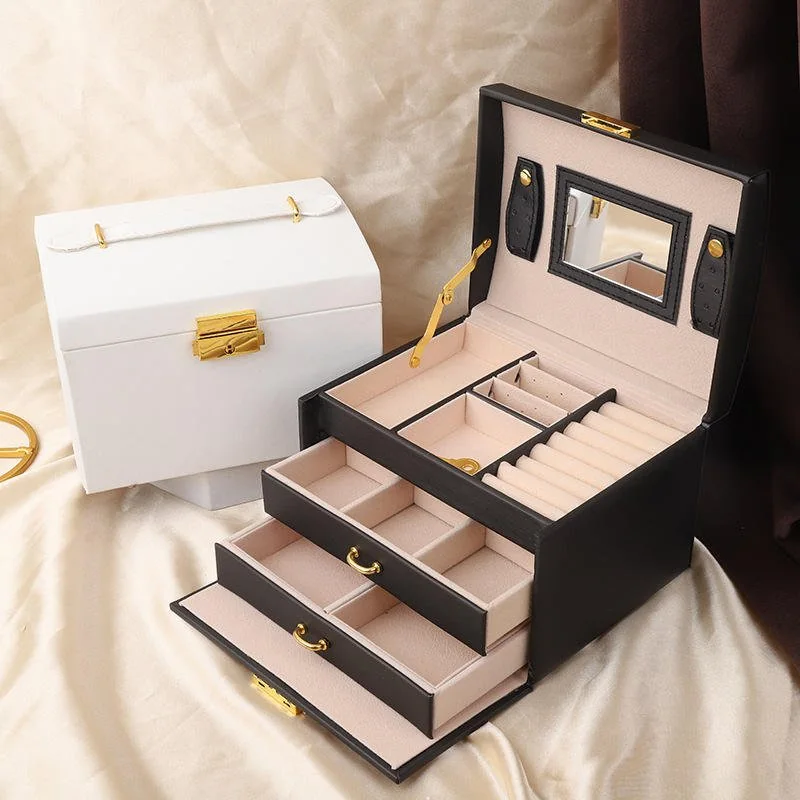
When a lock earns its place
A lock makes sense when the case travels, when it holds a collection rather than a single piece, or when it is the item that stays on a counter overnight. For a small gift box that stays on a dresser, a lock adds hardware, weight and cost for very little.
What the lock actually stops
These are not security devices, and the specification should be honest about that: a small cam lock or hinged clasp stops casual opening, not forced entry. What it does reliably is hold the lid closed in a bag, keep drawers from sliding during transport, and signal that the contents matter.
Hardware as a quality signal
Hardware is where buyers test build quality without being asked to. A key that turns cleanly, a clasp that lines up, a hinge that does not flex — those details are read as evidence about everything else in the case. Plating has to match the foil or the studs elsewhere on the case, or the mismatch is the first thing a buyer notices.
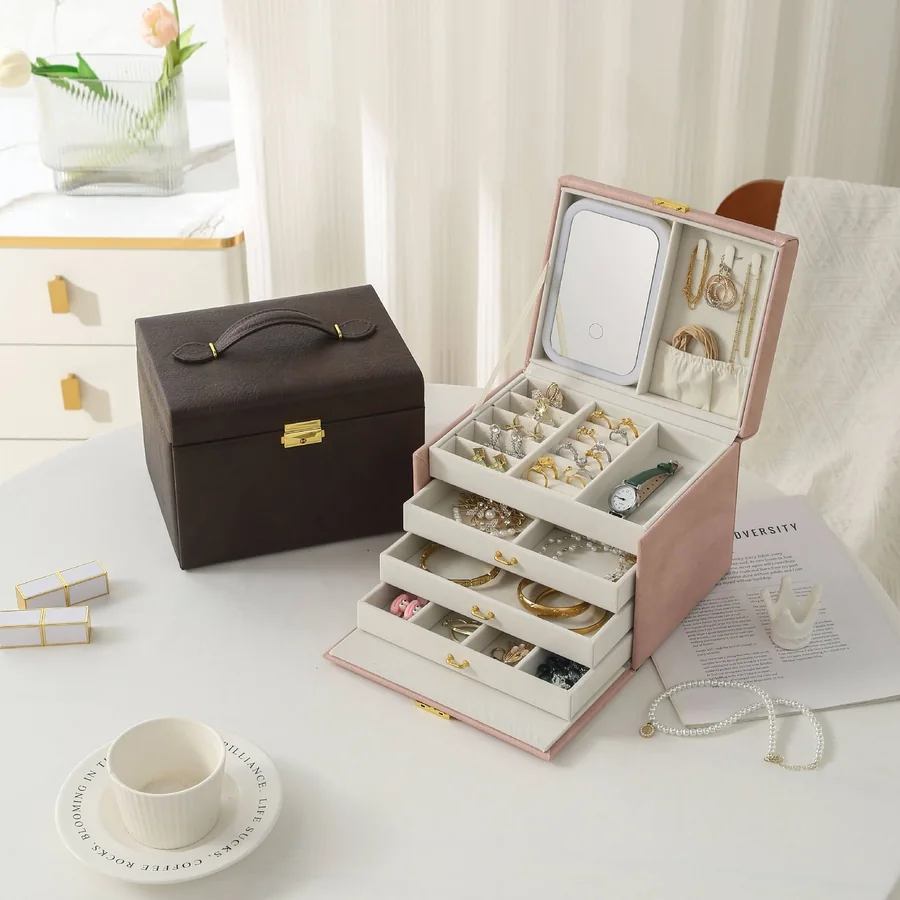
Specifying a lockable case for retail
Decide the tier count, then the lock, then the key. One key for a whole range is simpler for staff than a key per case, and a lock behind a flat drawer front is easier to align in production than one on a curved lid. Handle, corners and lining follow from those three choices.
Send the collection the case has to hold and how it will travel. Ask for the carcass, the insert and the hardware as separate lines, so the cost of the lock is visible.
What to send us. The product, who uses it, what goes inside, how it is branded, the quantity you actually need, and the date it has to be in hand. Quotes usually go out within one to two working days, with the sampling date confirmed in the same reply.
Send it through the quote form — drawings, a sample photo or a link all work. We will sign an NDA before you share anything confidential.